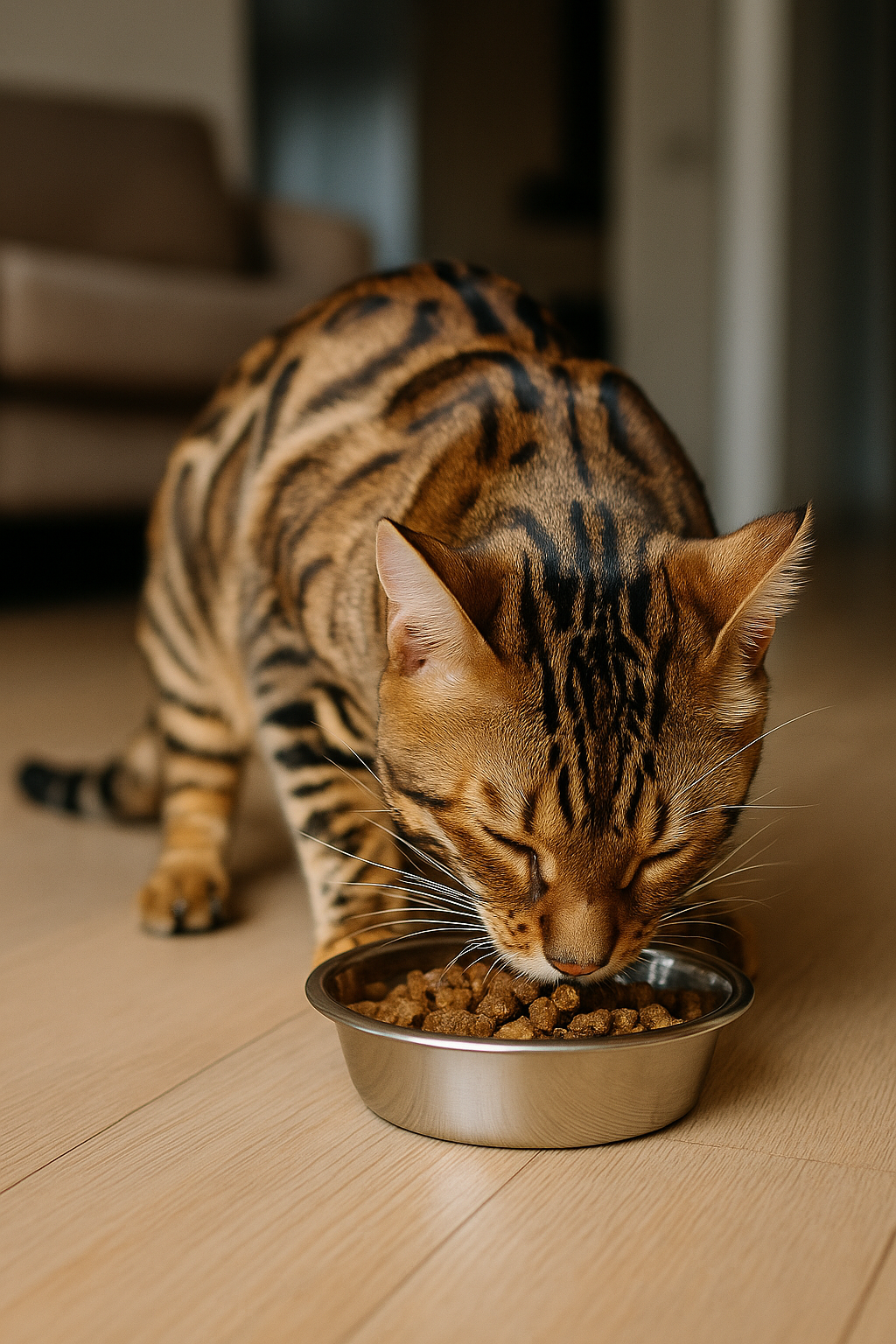
The Bengal Cat, resulting from a crossbreed with the Asian leopard cat, has an active and muscular metabolism. To preserve its health, vitality, and the beauty of its coat, a suitable diet is essential. This detailed guide explains the specific nutritional needs of the Bengal, the recommended types of food, ideal quantities, hydration, useful supplements, and mistakes to avoid so that your companion stays in great shape.
1. Specific nutritional needs
The Bengal requires a high amount of animal protein (minimum 40% of the ration) to support its muscle mass and activity. Fats provide the necessary energy, at 20–25%. Carbohydrates should be limited (< 15%) because this strict carnivore has few digestive enzymes to use them effectively. Vitamins (A, D, E) and minerals (calcium, phosphorus, zinc) are essential for the health of bones, coat, and immune system.
2. Choice of diet: kibble, wet food, or RAW
- Premium kibble: prioritize brands with high animal protein content (chicken, salmon, turkey). Avoid cereal-based ingredients (corn, wheat, rice).
- High-end pâtés: ideal for providing moisture. Choose recipes based on whole meats or fish, without animal by-products.
- BARF / RAW diet: raw food composed of meat, meaty bones, and offal. Maintain a ratio of 80% meat/bones and 20% offal, with added blended vegetables and fish oil. Requires strict monitoring of calcium and vitamin intake.
3. Quantities and meal frequency
For an adult Bengal weighing 4–6 kg, count on:
- 50–60 g of kibble twice a day, or
- 200–250 g of pâté divided into two meals, or
- BARF diet: 3–4% of body weight, i.e., 120–240 g per day.
Adjust according to age, activity level, and weight. Regularly check body condition: a slight waist curve and palpable ribs without excess fat.
4. Hydration and water fountain
The Bengal sometimes drinks little. Install a water fountain to stimulate its curiosity. Offer fresh water in several places around the home. Pâtés contribute to water intake (≈ 70% water). In RAW, water is already present in the meat, but monitor that the cat drinks after exertion or during hot periods.
5. Useful supplements and additions
- Essential fatty acids (Omega-3): fish oil for skin and coat health.
- Probiotics: for intestinal flora balance, especially after a course of antibiotics.
- Chondroprotectors: glucosamine and chondroitin in case of early arthritis (older subjects).
- Vitamins (B, E): immune support and antioxidant.
6. Prevention of overweight and weight monitoring
The Bengal can become sedentary in an apartment. Weigh it every month and adjust the ration if there is > 5% variation. Combine controlled feeding and play to maintain ideal muscle mass and avoid obesity, a source of metabolic diseases.
7. Common mistakes to avoid
- “Light” food not adapted to high protein needs.
- Too many brittle or poorly cut bones in RAW, risking obstructions.
- Sudden diet change: a 7–10 day transition is necessary.
- Giving treats rich in carbohydrates: limit to 5% of total caloric intake.
8. Internal linking and additional resources
- Complete guide on the Bengal Cat
- This article (you are here)
- Health and care of the Bengal
- Behavior and education of the Bengal
9. Frequently Asked Questions (FAQ)
Q1. My Bengal refuses its kibble, what to do?
Check the quality (protein level, absence of cereals). Gradually introduce the new brand by mixing 25% old kibble and 75% new over 7 days.
Q2. Can I give cooked meat leftovers?
Occasionally, only lean unseasoned meat (< 5% of the ration), without bones or fishbones to avoid digestive risk.
Q3. How to avoid deficiencies in BARF?
Strictly respect the meat/bone and offal ratio, supplement with a mix of powdered vegetables and a complete mineral/vitamin supplement specific for cats.
Q4. My Bengal drinks too much, is it normal?
Excessive consumption may indicate early diabetes or kidney failure. Consult a veterinarian if > 100 ml/kg/day.
Q5. How often should I change kibble?
Not systematically: choose a high-quality formula and keep it. Change only in case of digestive problems or veterinary recommendation.