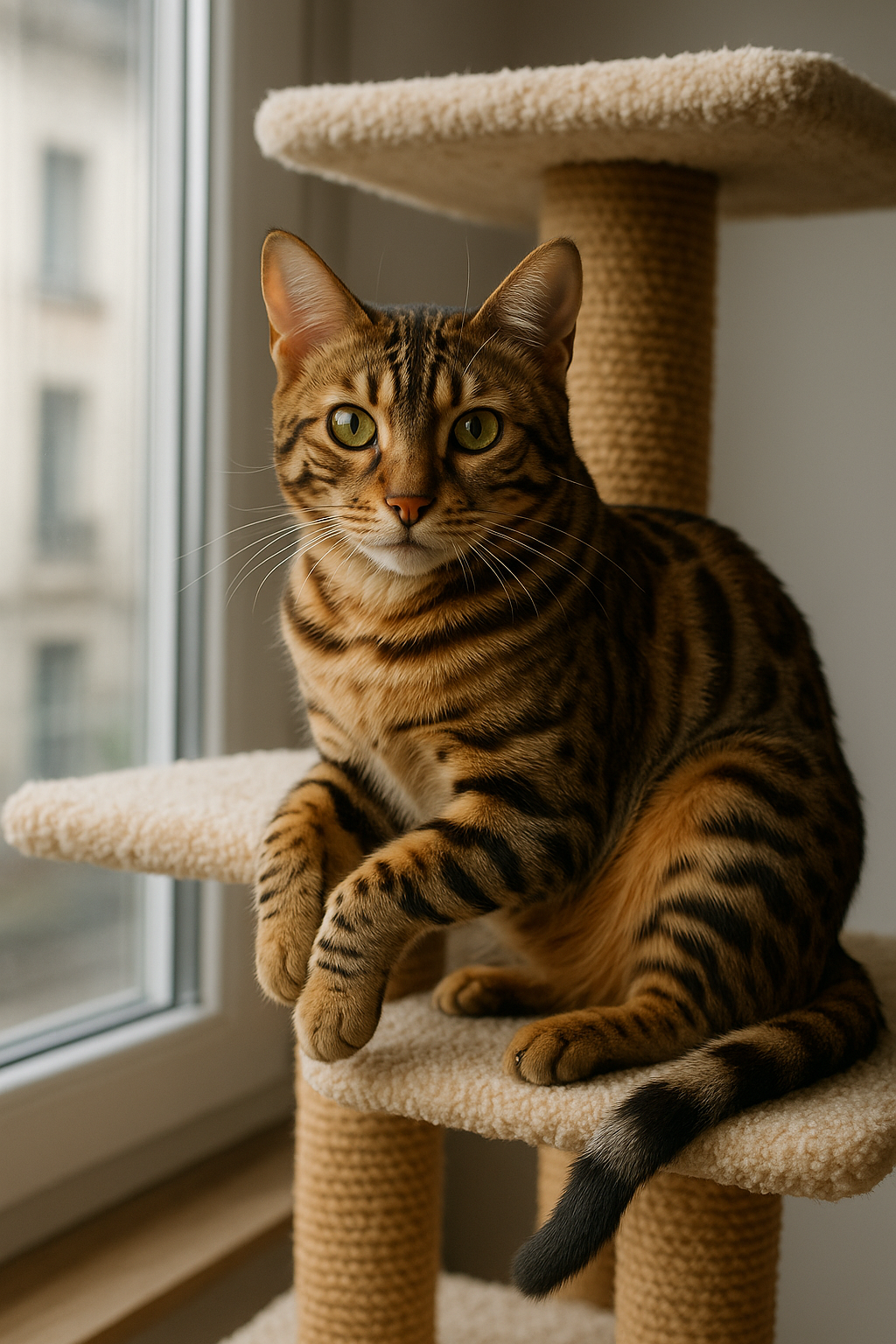
Intelligent, curious, and full of energy, the Bengal Cat is not a “classic” feline. It combines the hunting instinct of its wild ancestor (Prionailurus bengalensis) with the sociability of a domestic companion. To live in harmony with it, it is essential to understand its behavioral needs and adopt an appropriate education method. This article offers you a comprehensive plan to decode its behavior, teach it the right reflexes, and strengthen your bond.
1. Behavioral Characteristics of the Bengal
The Bengal is known for its sharp intelligence and constant need for mental and physical stimulation. It loves climbing, exploring, and solving puzzles. Its typical behaviors include:
- Extreme curiosity: it snoops everywhere, opens cupboards, and follows its humans closely.
- Intense physical activity: it can spend long sessions running, jumping, and climbing.
- Water play: many Bengals like to play with water, drink from the sink, or even dip their paw in their bowl.
- Varied vocalizations: meows, trills, and coos to communicate its need for attention.
- Moderate territoriality: if socialized early, it accepts other cats and dogs well.
2. Socialization and Early Learning
Early socialization (before 12 weeks) is crucial. Gently introduce your Bengal kitten to household noises (vacuum, radio), other animals, and family members. To get it used to its litter box and bowl:
- Place the litter box in a quiet and accessible spot.
- Show it where its food is, lightly scratch the litter after each meal to encourage it to go there.
- Systematically reward good behaviors (treats, petting).
To let it feel secure, offer it a refuge corner (basket, box) where it can retreat.
3. Environmental Enrichment
To channel its energy, set up an activity course:
- Cat trees with platforms at different heights.
- Secure wall shelves for climbing.
- Interactive toys (food puzzles, kibble-dispensing balls).
- Water fountain to stimulate its attraction to running water.
- Varied scratching posts (vertical, horizontal, sisal).
Alternating free play, toy-throwing sessions, and calm moments is essential to prevent boredom and destructive behaviors.
4. Positive Education Methods
The Bengal responds very well to positive reinforcement. Here are some tips:
- Clicker training: associate a sound (click) with a treat to mark the desired action.
- Recognition of simple commands: “sit,” “come,” learned with patience and rewards.
- Brief but frequent: sessions of 2–3 minutes, several times a day.
- Avoid punishment: the Bengal can become wary; divert its attention to a toy.
- Routine and consistency: always use the same word or gesture for each command.
5. Managing Undesirable Behaviors
Inappropriate scratching, nighttime meowing, or hyperactivity are often linked to boredom or stress. To remedy this:
- Increase the number of 10-minute play sessions before bedtime.
- Install a diffuser of calming pheromones (Feliway).
- If scratching furniture, place a scratching post nearby and praise it as soon as it uses it.
- Use a harmless sound clap to interrupt a bad action, then redirect to an appropriate behavior.
6. Internal Linking and Additional Resources
To go deeper:
- Complete Guide on the Bengal Cat
- This article (you are here)
- Daily Life and Activities for Bengal
- Health and Care of the Bengal
7. Frequently Asked Questions (FAQ)
Q1. My Bengal jumps everywhere at night, how to channel its energy?
Organize an intense play session (feather launcher) 30 minutes before bedtime, then give it a kibble-dispensing toy to keep it occupied.
Q2. How to prevent it from scratching my plants?
Install a vertical scratching post and a sisal mat near its exploration areas. Use a cat repellent spray on the pots.
Q3. My Bengal doesn’t like the offered litter, what to do?
Test several granularity types (silica, clay, plant-based). Place a box in a quiet place and clean it daily.
Q4. Can I teach it to walk on a leash?
Yes, with a well-fitted harness, be patient with short 5-minute sessions, reward it if it moves forward without pulling.
Q5. Which toys are essential?
Sturdy cat tree, feather toys on a stick, food puzzles, and kibble-dispensing ball.