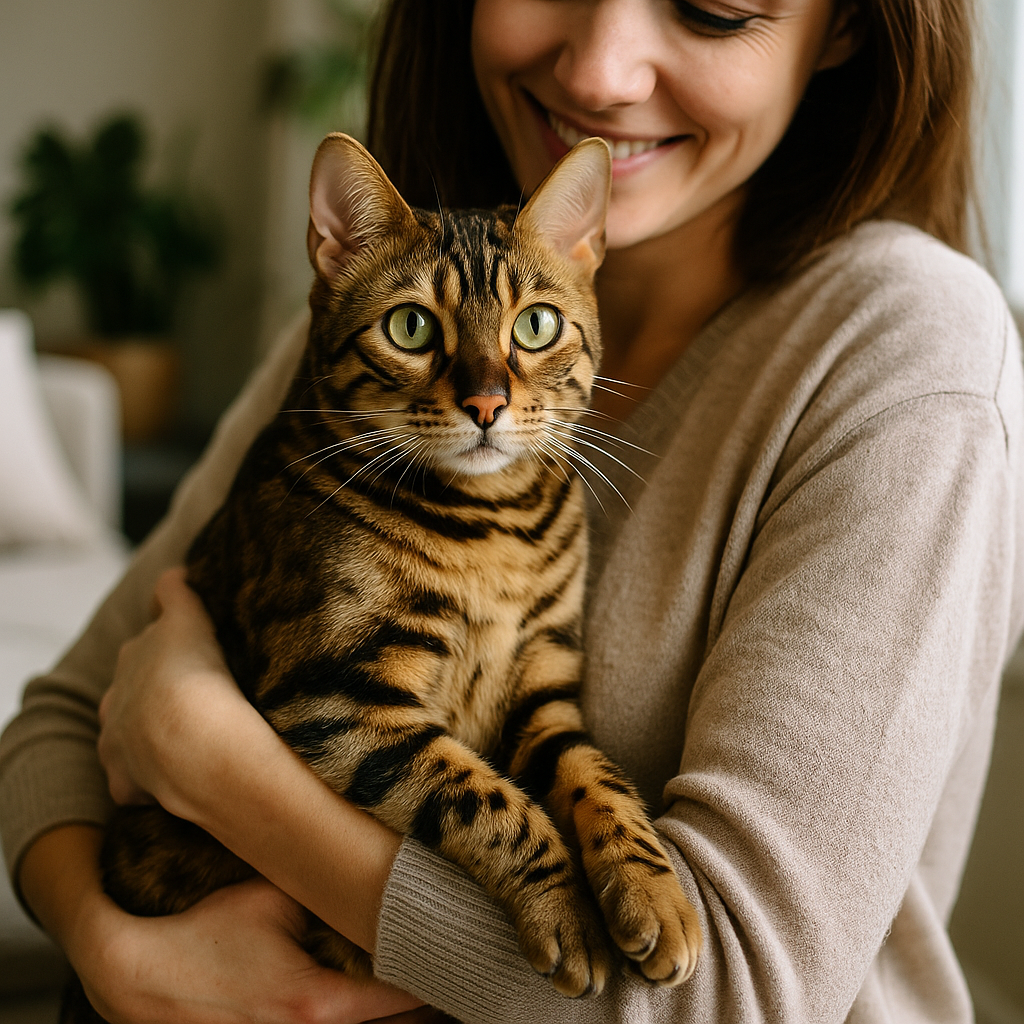
Adopting a Bengal cat is an exciting adventure: this feline with a spotted or marbled coat, descendant of the Asian leopard cat and various domestic lines, captivates with its grace, intelligence, and sociable character. Before taking the plunge, it is essential to fully understand the adoption procedures, the costs involved, the criteria for selecting a breeder or shelter, as well as the necessary preparations to welcome a Bengal under good conditions. This article details all the steps to successfully adopt your future Bengal companion.
1. Why choose a Bengal cat?
The Bengal stands out for its exotic appearance: athletic body, coat with “spotted” or “marble” patterns, and piercing gaze. Beyond aesthetics, it is a lively, curious cat very attached to its family. It loves to play, explore, and interact, making it an ideal companion for dynamic households. Moreover, its short and dense coat requires little maintenance. Finally, adopting a Bengal means preserving a rare lineage and contributing to the promotion of responsible breeding, attentive to animal welfare.
2. Purchase cost and ongoing expenses
The price of a Bengal cat of F4 lineage or higher generally ranges between €1,000 and €2,500, depending on coat quality, breeder reputation, and health tests (PKD, HCM). Also count administrative fees (identification, vaccinations, sterilization) around €150 – 200. Monthly expenses include €30 – 50 for premium food, €5 – 10 for litter, and €10 – 20 for toys or enrichment structures. Plan a budget of €200 – 300 for the first year for setup (cat tree, accessories, bedding).
3. Where to adopt: breeder, shelter, or private individual?
Professional breeder: guarantees pedigrees, health tests, and post-adoption follow-up. Check membership in an association (TICA, LOOF), quality of facilities, and breeder ethics. Shelter or association: rarer for Bengals, but some associations take in abandonments; adoption is less expensive there (€200 – 400), often with sterilization already done. Private individual: caution required; ask to see the parents, the living conditions of the kittens, and health documents.
4. Criteria for selecting a responsible breeder
A good breeder must present:
- Pedigrees and F4 or higher lineage.
- Health tests for hypertrophic cardiomyopathy (HCM) and polycystic kidney disease (PKD).
- Breeding conditions compliant with animal welfare (living spaces, socialization).
- Follow-up of kittens (weaning at 3 months, identification by microchip).
- An adoption contract specifying guarantees and mutual obligations.
5. Adoption procedure and formalities
Step 1: contact to arrange a visit. Step 2: reservation with deposit (usually 20% of the price). Step 3: signing an adoption contract including pedigree, health record, and breeding recommendations. Step 4: delivery of the kitten between 12 and 14 weeks, identified and vaccinated. Step 5: registration with LOOF (for recognized breed subjects). Finally, plan a veterinary check-up visit within the week following arrival.
6. Preparing for your Bengal’s arrival
Set up a dedicated space with:
- A sturdy cat tree and high platforms.
- A quiet and easily accessible litter box.
- Stable bowls (water, food) placed away from the litter box.
- A secure transport carrier.
- Exploration toys (puzzles, ping-pong ball).
Carry out a gradual food transition over 7 days, get him used to the house by giving him a quiet corner for the first few days, then increase playful interactions and cuddles to build trust.
7. Internal linking and useful resources
To learn more:
- Complete guide on the Bengal cat
- Bengal Cat Health: diseases, prevention, and veterinary follow-up
- Bengal behavior and education
8. Frequently Asked Questions (FAQ)
Q1. At what age should you adopt a Bengal?
Weaning is complete at 12 weeks. Adopting between 12 and 14 weeks ensures good socialization and optimal development.
Q2. Should sterilization be done immediately?
Sterilization is recommended between 5 and 6 months to prevent territorial behaviors and avoid unwanted litters.
Q3. How to establish a bond of trust?
Create routines (meals, play), use interactive games, respect his need for calm, and reward him with treats during initial interactions.
Q4. What is the best diet?
Choose premium kibbles rich in animal proteins (> 40%) or a mixed diet (kibbles + quality pâté), adjusting portions according to activity to avoid obesity.
Q5. How to manage adaptation stress?
Introduce the kitten gradually to the home, let him explore on his own, and install a diffuser of calming pheromones (Adaptil or Feliway).