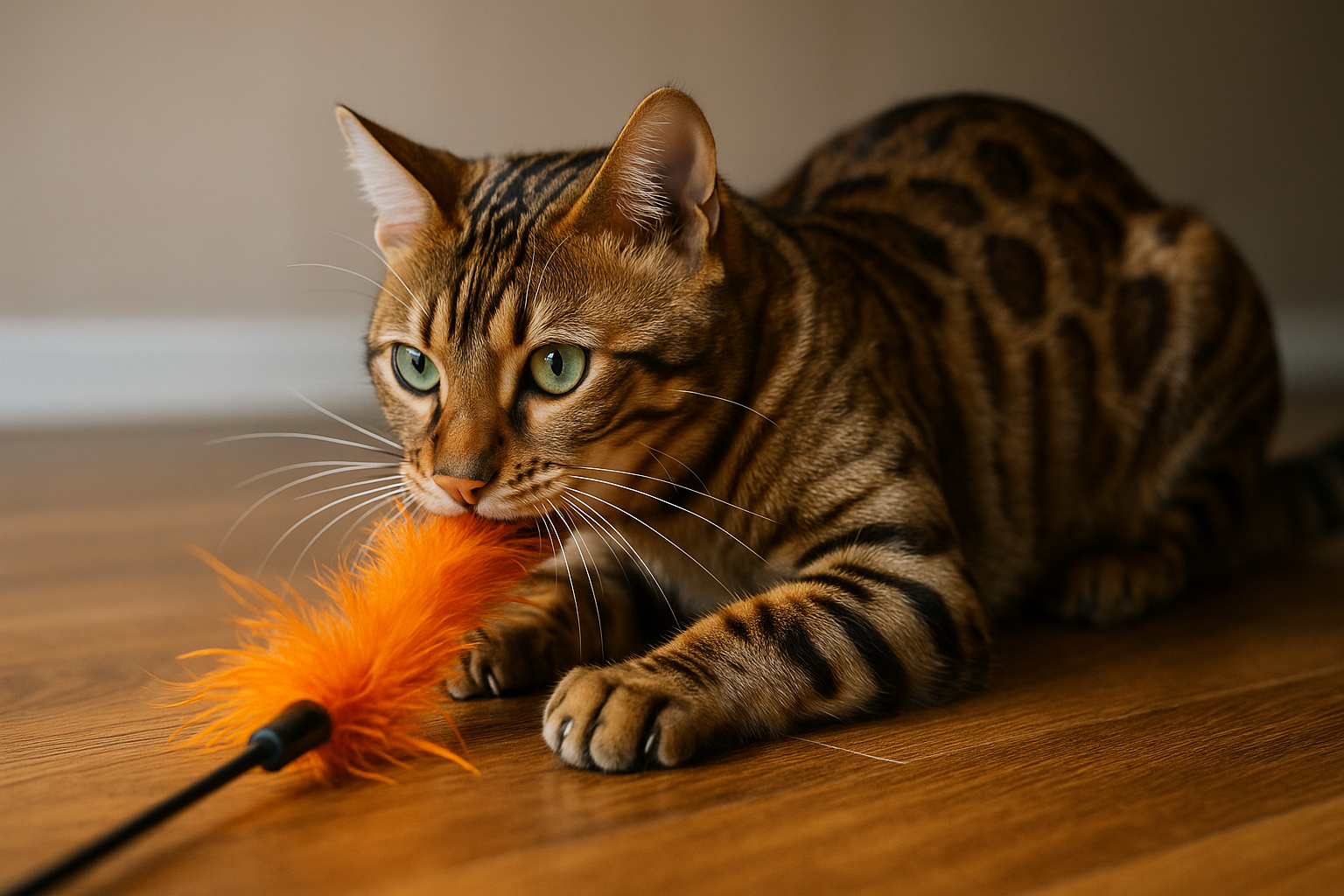
The Bengal Cat, with its overflowing energy and insatiable curiosity, requires a stimulating environment to fully thrive. Unlike many domestic cats, it loves to explore, climb, play with water, and interact with its humans. This article presents a comprehensive guide to setting up its habitat, offering suitable activities, managing coexistence, and maintaining a harmonious relationship daily.
1. Setting up a stimulating habitat
To avoid boredom and destructive behaviors, think verticality and variety:
- Modular cat trees: minimum height 1.80 m, platforms at various levels.
- Secure wall shelves: high pathways to observe the territory.
- Hiding spots and nests: cardboard boxes, hanging huts for retreat.
- Horizontal and vertical scratchers: sisal, cardboard, and raw wood to vary textures.
- Water fountain: encourages drinking and playing with water.
2. Games and mental enrichment
The Bengal loves solving puzzles and hunting:
- Dispenser toys: food puzzles where it must turn or push to get the kibble.
- Mechanical balls and mice: prey imitation to stimulate hunting instinct.
- Clicker training: learning tricks (sit, high five) with positive reinforcement.
- Interactive games: laser, feather wand, fishing rod for short but intense sessions (5–10 min).
- Hide and seek: hide treats around the house to hunt for treasure.
3. Managing coexistence
The Bengal can get along with other animals if introductions are well managed:
- Gradual introduction: separations by mesh door, scent exchanges (towel).
- Supervision of first contacts: short interactions, accompanied by treats.
- Retreat space: each animal must have its own personal area.
- Clear rules: restricted access to certain rooms to avoid conflicts.
4. Daily routines
Bengals appreciate regularity:
- Fixed meal times: 2 meals per day to structure the day.
- Morning play sessions: 10 minutes upon waking to burn excess energy.
- Quiet time: moments of petting and brushing at the end of the day.
- Comfortable bedding: cozy basket placed high for a sense of security.
5. Monitoring and well-being
To quickly detect discomfort or stress:
- Weight control: monthly weighing, ration adjustment.
- Coat observation: soft and shiny fur, no bald patches.
- Social behavior: consistent interaction level, no aggression or avoidance.
- Litter box: daily cleanliness, appropriate shape and texture.
6. Frequently Asked Questions (FAQ)
Q1. My Bengal scratches doors at night, how to keep him occupied?
Before bedtime, offer an active play session (laser or feather wand) to tire him out. Leave a dispenser toy so he can entertain himself.
Q2. How to get him used to the car?
Start by placing the carrier inside the house, let him explore it, then take short car rides with treats to associate it with a positive experience.
Q3. Can I teach him to fetch an object?
Yes, with clicker training: use a small ball and reward each return. Start with short distances.
Q4. How to prevent escapes?
Ensure doors and windows are closed, install a safety net, and make sure he has enough enrichment indoors to limit his outdoor curiosity.
Q5. My Bengal gets bored when I’m away, what to do?
Program an automatic kibble dispenser, leave interactive toys, and diffuse calming pheromones (Feliway).